

Project description
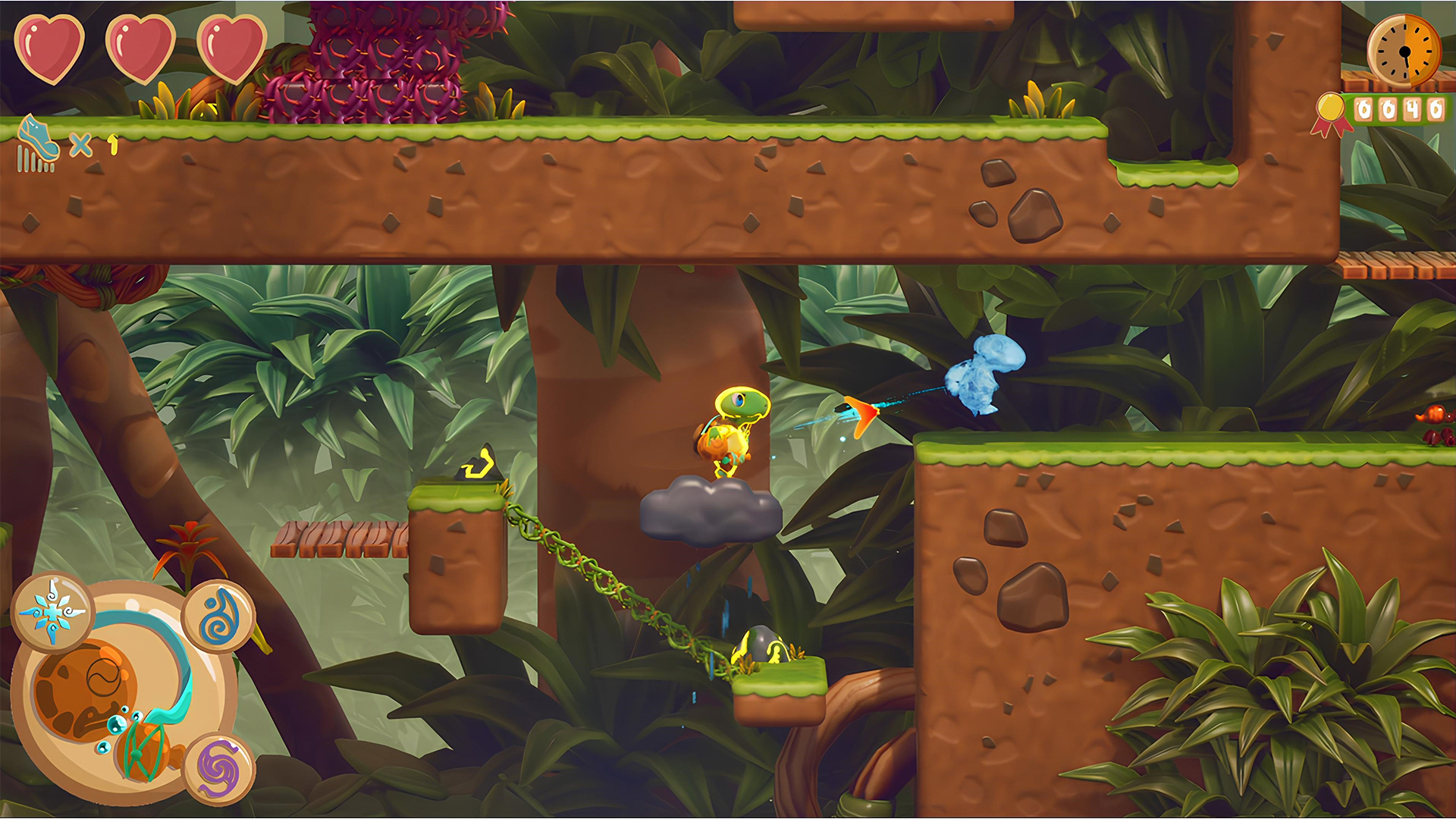
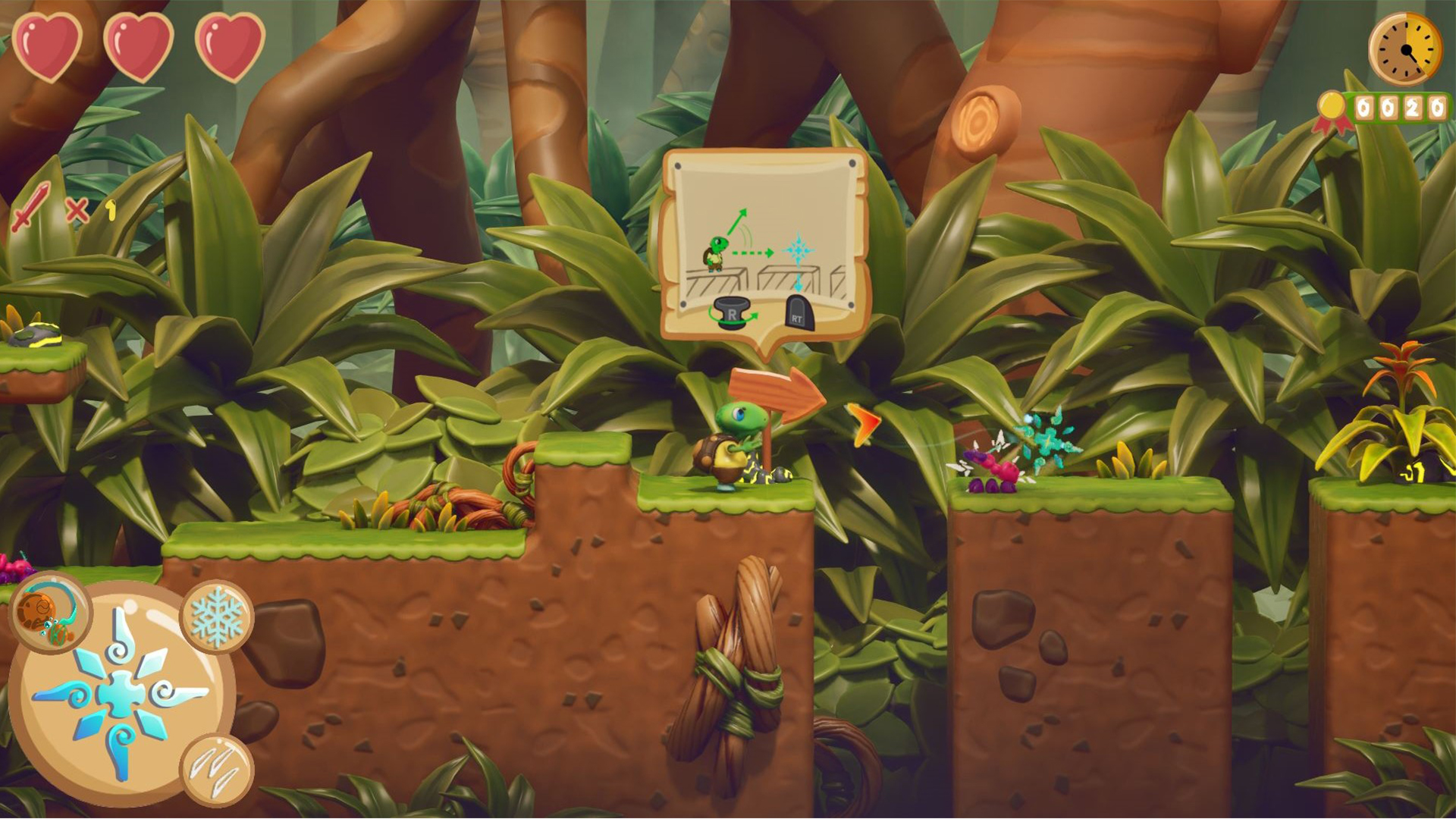
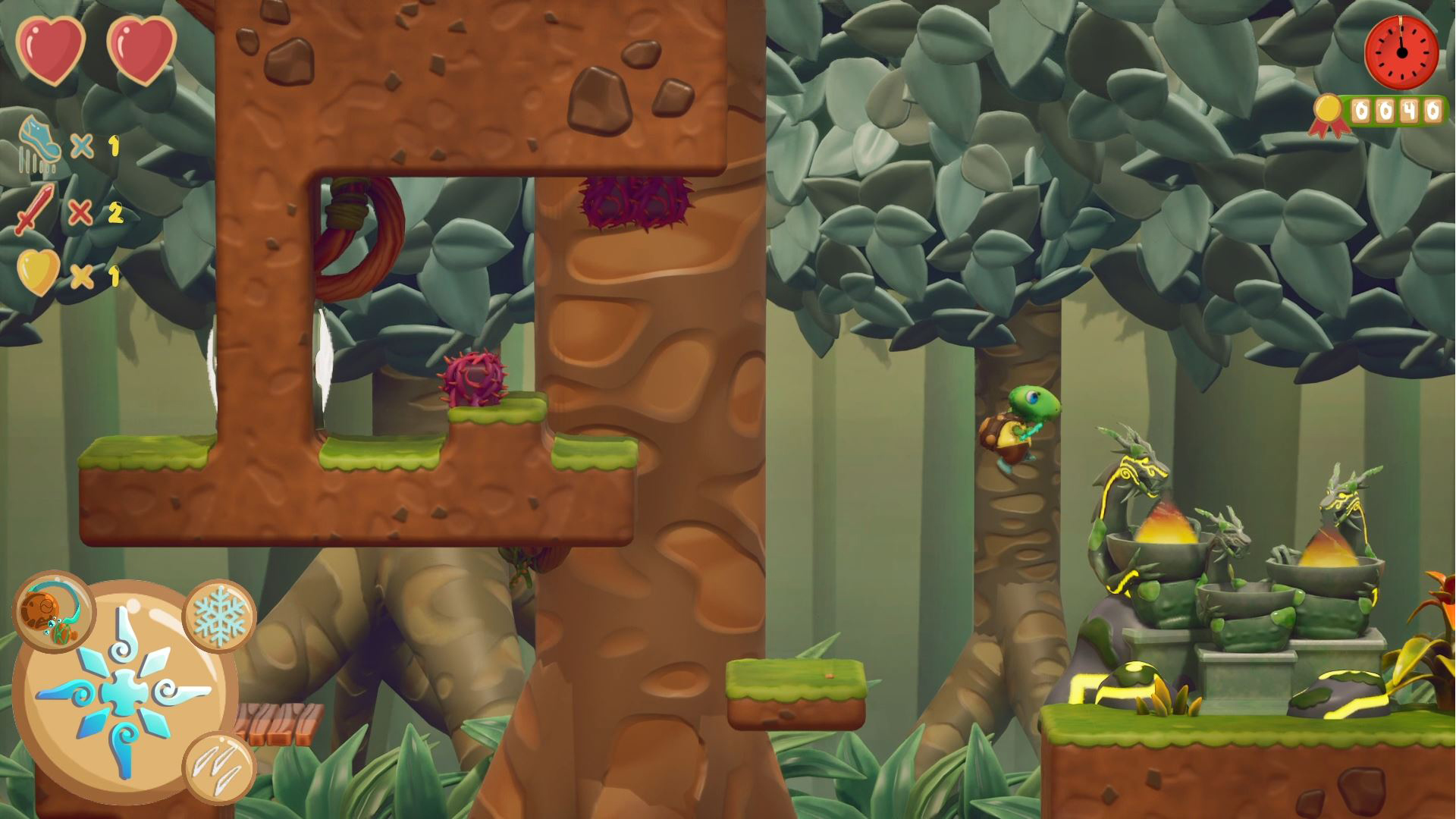
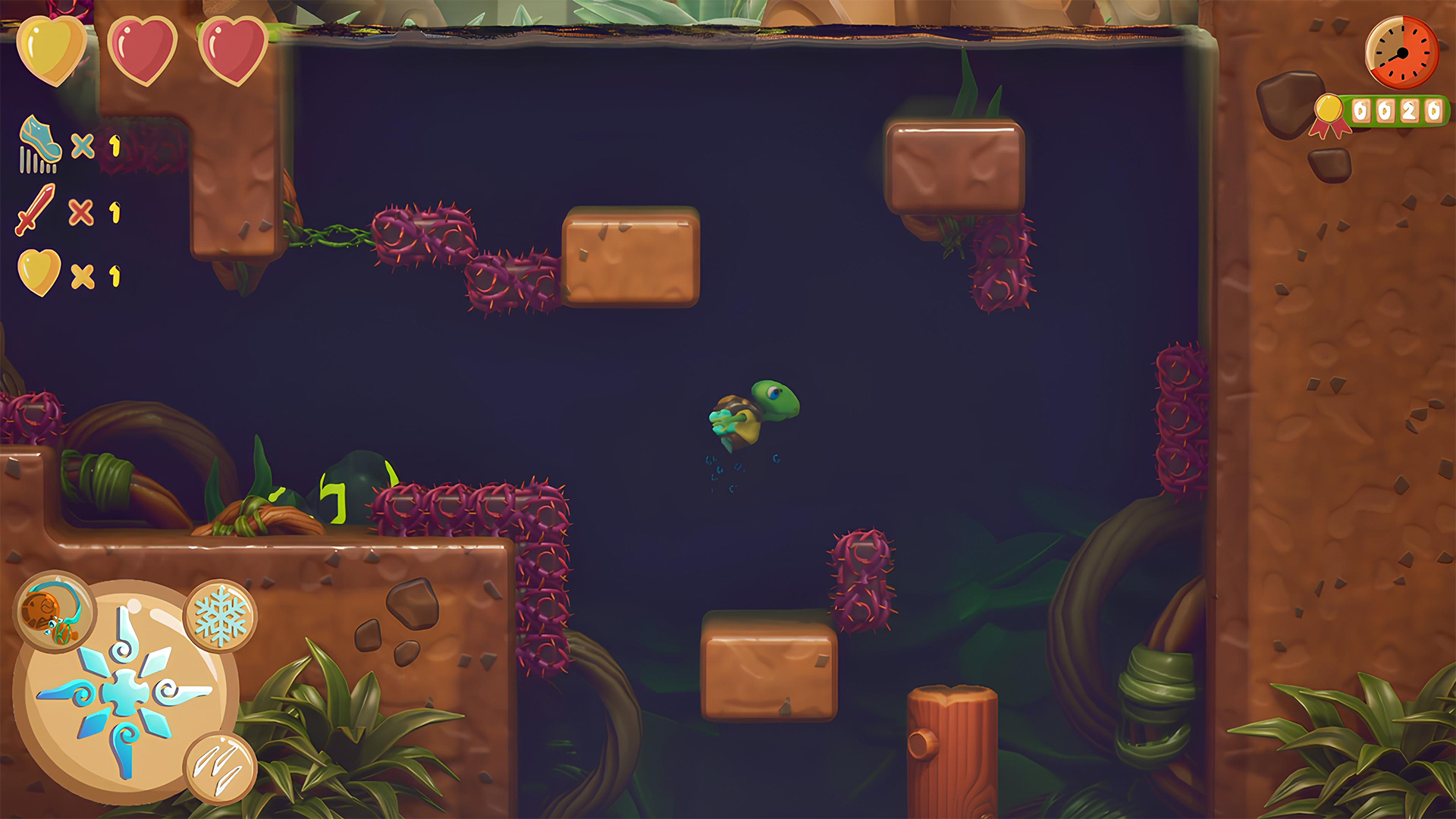
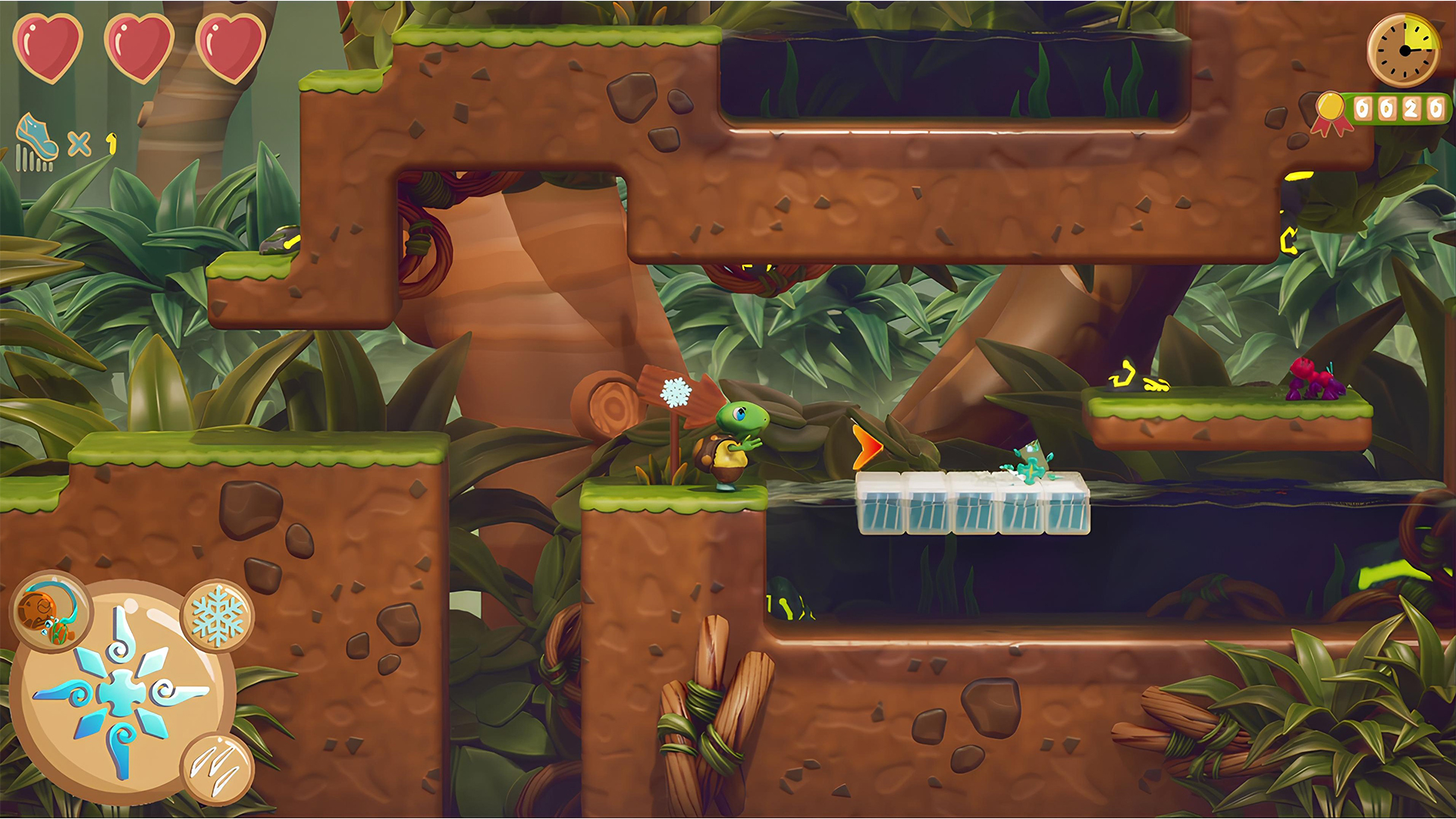
Play as Pippin the turtle and complete the jungle mangrove course in order to pass the test. A high action puzzle-platformer where you combine your elementally charged weaponry to interact with the level. Although you should avoid failing, if or when you do, you gain a buff attributed to the cause of your failure. For example, falling of the map would result in getting a jump buff. Time also isn’t on your side, as your final scoring is determined by your ant kill total, your amount of failures, and how long it took you to get to the end. This in turn determines if you can pass to the next level!
Project Kame was developed over the course of a semester, as a project for the course ‘Group Project’. During which students go through the three fases of development, prototype, production and polish, all within 12 weeks. This particular project was in function of a client, JT Productions.
To be played with a controller, the game features an in-game tutorial which shortly explains the concepts of movement, attacking with weaponry, and how those weapons interact with the environment.
My contribution
Project Kame was made in collaboration with Mattis Deryckere, Felicia Larsson, Geoffrey Duqué, Renzo Depoortere en Bruce Vanmassenhove. The game also includes an original soundtrack composed by Darius Van Oeckel. This 12 week project was part of the last year of my study at Digital Arts & Entertainment. Through which we learned to colaborate with the other professions with within DAE. As previously mentioned, this project was in function of a client, JT Production, who entered the Group Project course alongside an initial Game Design Document. We were then tasked to create a vertical slice out of this concept, altering and reworking it as required, together in colaboration with the clients. Here are some of the main takeaway points.
- Having everyone on the same page: As the only IGP student in the team, I was the one with the most broad skillset, but less proficient in one aspect. Because of this I happened to swap through various tasks multiple times. Through this, and through helping ‘lead’ the team towards the end product, I learned of the importance of having everyone on the same page. By consistently talking with the team mates, asking them what they’re working on and tracking their progress, we were able to create a focussed vision that everyone could work towards.
- Working and debating with clients: As a client project, it was of course important for them to be happy with the progress of the project as well. That’s where our bi-weekly meetings came into effect. By sharing our progress and thought processes, we made sure that the project was to the clients liking, while also balancing scope and time limits.
This client project included an already written Game Design Document, as the people behind JT Production had already done their due diligence before applying as a group project. However, this didn’t mean that the design aspect was simple. New challenges arose with the fact that there was an original design. This design was much broader, and more vague. As a task for the first few weeks, our priority was re-shaping the existing design into a more hyper-focussed one. Creating a new Game Design Document that targeted specifically the vertical slice that we were meant to be making.
Level Design is an immensely important aspect of platformers. Our goals were too teach the player, and to allow for multiple routes. The choice depended on which weapon the player wanted to use. To meet this goal, I decided that the whole team should each design their own set of levels, and afterwards, explain these levels as we figuratively ran through them. This allowed us to go through many more iterations, and quickly deliberate which we liked the most.
As it happened, the a set of designs I made was chosen, who I refined further in a more detailed manner. Doing this on paper, it was much easier to alter and ask for feedback, before pitching it to the clients. After the designs were approved, we moved ahead with blocking the level out. Creating it in basic, already implemented, shapes allowed us to quickly see what the effect would be within the game itself. This gave us a better picture of the whole, and allowed us to make quick changes before implementing the full art.